Digitized health records enable monitoring of health trends, support more targeted resource allocation, and enable rapid responses to disease outbreaks. In Argentina, use of technology in healthcare research has been hampered by reductions in federal science funding and runaway inflation in the last few years, which have made acquiring and maintaining digital health infrastructure increasingly prohibitive.
In response, Proyecto ARPHAI sought to develop a project to accelerate and promote the ethical use of digitized health records nationwide. Led by CIECTI (the Interdisciplinary Centre for Science, Technology, and Innovation Studies), ARPHAI researches tools based on artificial intelligence and data science that can be applied to electronic medical records. By strengthening both the analytical value of health records and the technical and human capacity to work with health data, ARPHAI contributes to earlier detection of epidemic outbreaks and supports more timely, preventive public health decision-making.
Collaboration with IOI
In 2023, IOI opened the call for proposals for the Open Infrastructure Fund, which aimed to support the development of open research infrastructure services to strengthen sustainability, resilience, and adoption of open infrastructure. Proyecto ARPHAI was selected as one of the eight grantees of the fund, receiving funding of around US$18,000 to develop and sustain the infrastructure for processing and storing sensitive data from electronic health records in Argentina.
Implementation and Impact
The one-and-a-half-year project, which commenced in March 2024, was implemented in collaboration with the Centro de Computación de Alto Desempeño (CCAD), a high-performance computing facility at the Universidad Nacional de Córdoba (UNC), Argentina. A key deliverable was the acquisition of a high-capacity 'fatnode' server — affectionately nicknamed Gordito (Spanish for 'chubby') — equipped with 1 terabyte of RAM and support for 8 next-generation GPUs. The hardware provides the core computing infrastructure required to host and process electronic health records in a secure environment. The servers will support data storage, analysis, and the development of artificial intelligence models, enabling researchers to work with sensitive health data while maintaining responsible data governance. The server runs within CCAD's Kubernetes Cluster, hosting both Project Jupyter tools for interactive computing and Ollama for running large language models. The additional computing capacity has also benefited the broader teaching and research community at CCAD, extending its value well beyond health data applications.
“This server is a key piece for the JupyterHub at CCAD, which was recently inaugurated, because it is the one that makes it possible to run notebooks with one terabyte of RAM and up to four GPUs, providing computing power for the largest projects. The facility has also been a big boost for our wider research community at CCAD as we now have more computing power available even for researchers in other areas beyond healthcare,” commented Nicolás Wolovick, Director of CCAD.
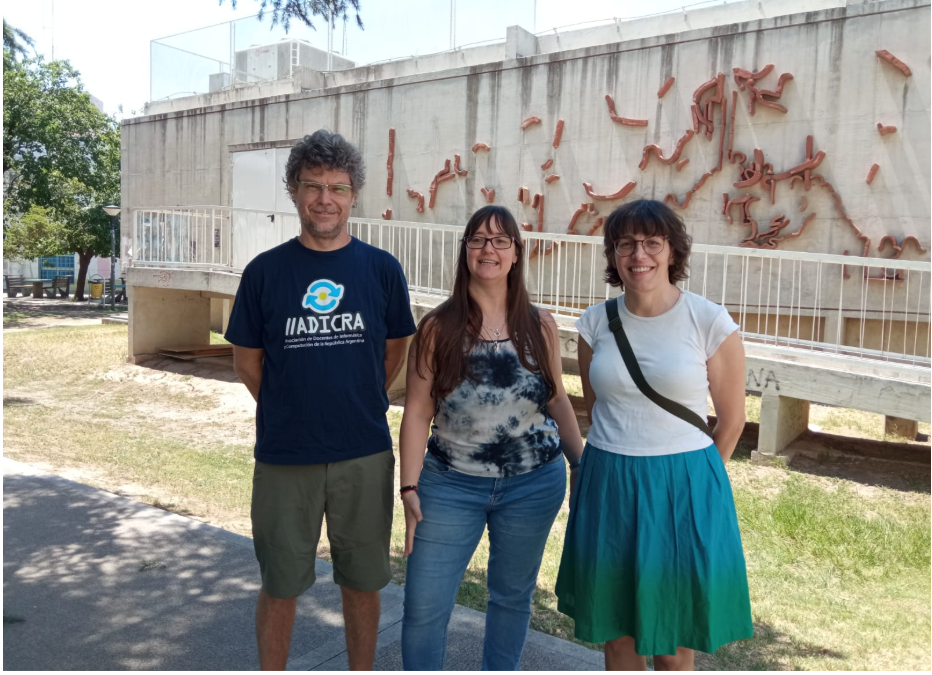
To ensure that sensitive data stored on national servers yields actionable policy insights, the ARPHAI team organized two training sessions for government health officials in May and July 2025. These interactive sessions gave officials a solid foundation for working with sensitive electronic health data and for leveraging insights derived for the public good. Extensive documentation and training materials in Spanish were developed and made freely available to the Argentine research community under CC-BY licences, hosted on both the ARPHAI repository and Zenodo.
The importance of using local servers when dealing with a population’s health data is key to ensuring digital sovereignty and the protection of personal data, and strengthens states’ ability to manage data autonomously and in line with public interest objectives.
“It was a great pleasure for us to share our experience and help pave the way for those who face the daily challenge of working with sensitive data. It was doubly rewarding, not only because of the interest and feedback generated by the training, but also because it was an achievement in itself to get people so busy with the demands of daily management to take a moment to reflect on and analyze the impact of their work and their approach to it. Today, in a context where science funding faces significant challenges (particularly in countries like Argentina), these kinds of initiatives are especially valuable, as they contribute to sustaining and strengthening established research groups with demonstrated expertise and ongoing activity,” remarked Sabrina Lopez from Proyecto ARPHAI.
Lessons Learnt
Technical investment must be matched by human investment. The project design accounted not only for hardware but also for the capacity building needed to ensure long-term sustainability. Projects that focus solely on the technical side often face sustainability challenges. Community buy-in and well-trained personnel are equally critical to success.
The importance of partnerships in funding and sustaining open infrastructure. In recent years, funding for the science and education sector in Argentina has been cut. This, in turn, has created a massive financial deficit. From the project, we can see exemplary collaboration between different stakeholders (universities, research organizations, infrastructure services, and non-profits) to work together for the common good by pooling resources, which needs to be emulated.
ARPHAI's vision was realized through its partnership with CCAD, not in isolation. CCAD hosts the project’s infrastructure and data and supports the development of an active community of practice. CCAD had supported ARPHAI's research for two years before the IOI funding was secured — a testament to the importance of cultivating strong, mutually beneficial relationships in advancing societal impact.
Embed, don't impose. Infrastructure investments are more likely to see organic adoption when they flow through organizations and networks already embedded in their communities. These organizations bring the trust and contextual understanding that funders can't manufacture — they know what to build, for whom, and why it will actually get used.
Conclusion
Proyecto ARPHAI demonstrates what becomes possible when technical ambition is matched by the right partnerships, development of human capacity, and a commitment to openness. The challenge now is to scale this model to ensure that other sectors beyond healthcare can leverage open infrastructure for broader, sustained impact.