After months of working together over video calls, there’s nothing quite like finally getting together in person. In late October, Katherine Skinner, Jerry Sellanga, and Lauren Collister travelled to Lilongwe, Malawi, to represent IOI at UbuntuNet CONNECT, the annual convening of this region’s 16 National Research and Education Networks (NRENs) from Eastern and Southern Africa. Here we share some of our experiences from the conference as well as the key insights that we brought back to our team at IOI.
Listening to NREN leaders
UbuntuNet Alliance is one of the grantees of the IOI Fund for Network Adoption alongside LA Referencia and the event was our first opportunity to meet up in person, deepen relationships and understandings across the 16 participating NRENs, and take stock of project progress so far together. As part of the project, UbuntuNet Alliance is rolling out DSpace as a managed cloud service (DSaaS) to help ensure that institutions of higher learning within the region have repositories that will help make African research more visible, findable, and citable globally.
The project invests as much in people as in technology, training more than 75 system engineers to manage the national repository infrastructures in each country and over 560 librarians to become repository managers and metadata librarians supporting researchers. By the end of the project, the aim is to have created over 400 new open institutional repositories in Eastern and Southern Africa. UbuntuNet Alliance will also train over 450 data champions to support the creation and curation of over 960 curated open datasets that can be cited, discovered, and reused by researchers and policymakers worldwide.
As part of the pre-conference activities, we hosted an in-person workshop in Lilongwe with the UbuntuNet Alliance member NREN CEOs. The implementation of the DSaaS project began in January 2026 in the Alliance member countries, steered by the NRENs with IOI collaborating virtually. The workshop was a good opportunity to meet face-to-face and reflect on project progress and future outlook together.
In the workshop, IOI shared insights regarding two processes initiated this year: a series of interviews IOI conducted with NREN CEO on their expectations for their countries, as well as IOI’s synthesis of NREN business plans for their DSaaS implementations. The insights of the analyses provided the context for rich discussions on potential peer synergies in project implementation, potential obstacles that may impede project success, and how IOI can better support the NRENs to optimize uptake of DSaaS in each national context.
Just as importantly, we came to listen. The CEOs, from TENET (Tanzania), BotsREN (Botswana), ZimREN (Zimbabwe), RENU (Uganda), MoReNET (Mozambique), MAREN (Malawi), ZamREN (Zambia), KENET (Kenya), and iRENALA (Madagascar) told us how the early phases of the project had gone for them, from the in-country trainings and the development of sharing platforms. Their input will help shape what comes next.
Shaping Digital Horizons
This year’s UbuntuNET CONNECT theme, Shaping Digital Horizons, captured a shared vision: resilient, inclusive, and sustainable digital infrastructure that supports research, education, and innovation across Eastern and Southern Africa. Throughout the two-day conference, speakers returned to one big idea: connectivity and collaboration are the foundation for future-ready research ecosystems. Sessions explored themes such as Artificial Intelligence, cybersecurity, digital identity, open science, network infrastructure, and diversity, equity and inclusion in African research. These sessions provided exceptional insights on the innovative services built around evolving community needs and highlighted the cross-border collaborations that make the region’s networks so strong.
It was also a celebration. UbuntuNet Alliance marked its 20th anniversary, and we joined in recognizing two decades of progress and the many connections their work has made possible.
Launching OPAR
A highlight of the conference was the launch of the Open Pan-African Repository (OPAR), Africa’s first metadata aggregator, developed as part of UbuntuNet’s work under the IOI Fund for Network Adoption. OPAR is a discovery engine that brings together records and metadata from institutional and disciplinary repositories across Africa into one place. One of the biggest challenges in African research is how fragmented the African scholarly information landscape is. Different universities have their own publishing platforms with different metadata practices, discovery interfaces. For one to find relevant research, often one has to know which institution has it and then search their individual repositories. OPAR solves this challenge by bringing scholarly records in one corpus, while ensuring the identity of institutions and repositories is preserved.The result: research from and about the continent becomes much more visible, accessible, and discoverable.
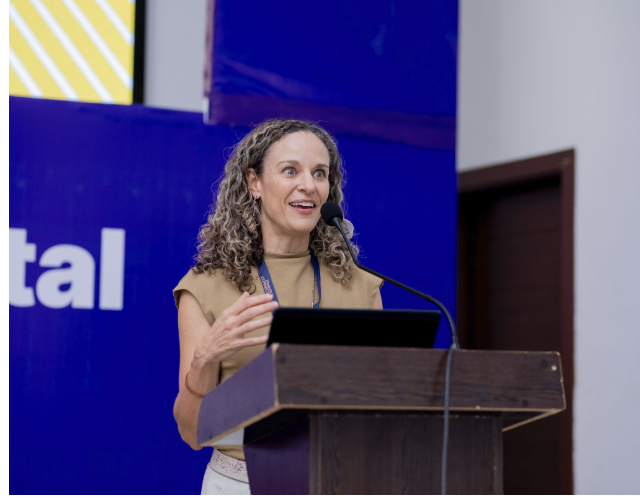
IOI was delighted that Katherine Skinner, IOI Director of Programs, was invited to give the keynote, which covered the importance of infrastructure in furthering the visibility of African research. As Katherine said, ‘I was excited to explore what OPAR and other open infrastructures across Africa could achieve. Growth can be challenging, but together we are using our expertise and research insights to connect the work of disparate networks, institutions and individuals, creating a more resilient and sustainable infrastructure that gives continent-wide access.
Looking ahead
The workshop with NREN CEOs gave us tangible insights into where IOI can further support the rollout of DSaaS in the project countries, and how we can work with the NRENs to fine-tune business models so the service is sustainable within the realities of each country. That is the heart of what the IOI Fund for Network Adoption sets out to do: invest in regional networks so that open infrastructure is not only adopted, but sustained and shaped by the communities who rely on it. Seeing OPAR launch, librarian and system engineer trainings take root, and NRENs build their own plans for the service, all within the first year, shows what becomes possible when that investment goes to networks with deep regional reach and trust.
We came home inspired by the project reports, the energy in the sessions, and above all the people behind this work. Our thanks to UbuntuNet Alliance, host organization MAREN, and everyone who welcomed us in Lilongwe. For photos and conference materials, read UbuntuNet’s conference wrap-up. As the year draws to a close, we look forward to deeper collaboration with UbuntuNet Alliance and the NRENs over the next two years of the project, and to seeing many of you again at UbuntuNet CONNECT 2027 in Cape Town, South Africa.