In a landscape where open source infrastructure routinely outlasts the funding that created it, the Corporation for Digital Scholarship (also known as Digital Scholar) has spent more than 15 years exploring a different path. Built around flagship tools used by millions of researchers worldwide, and now extending that experience to help other projects find their footing, Digital Scholar offers a model worth understanding. We spoke with Co-CEO Sharon Leon about the organization's origins, its distinctive approach to sustainability, and what they have learned from years of keeping infrastructure — and the humans behind it — going.
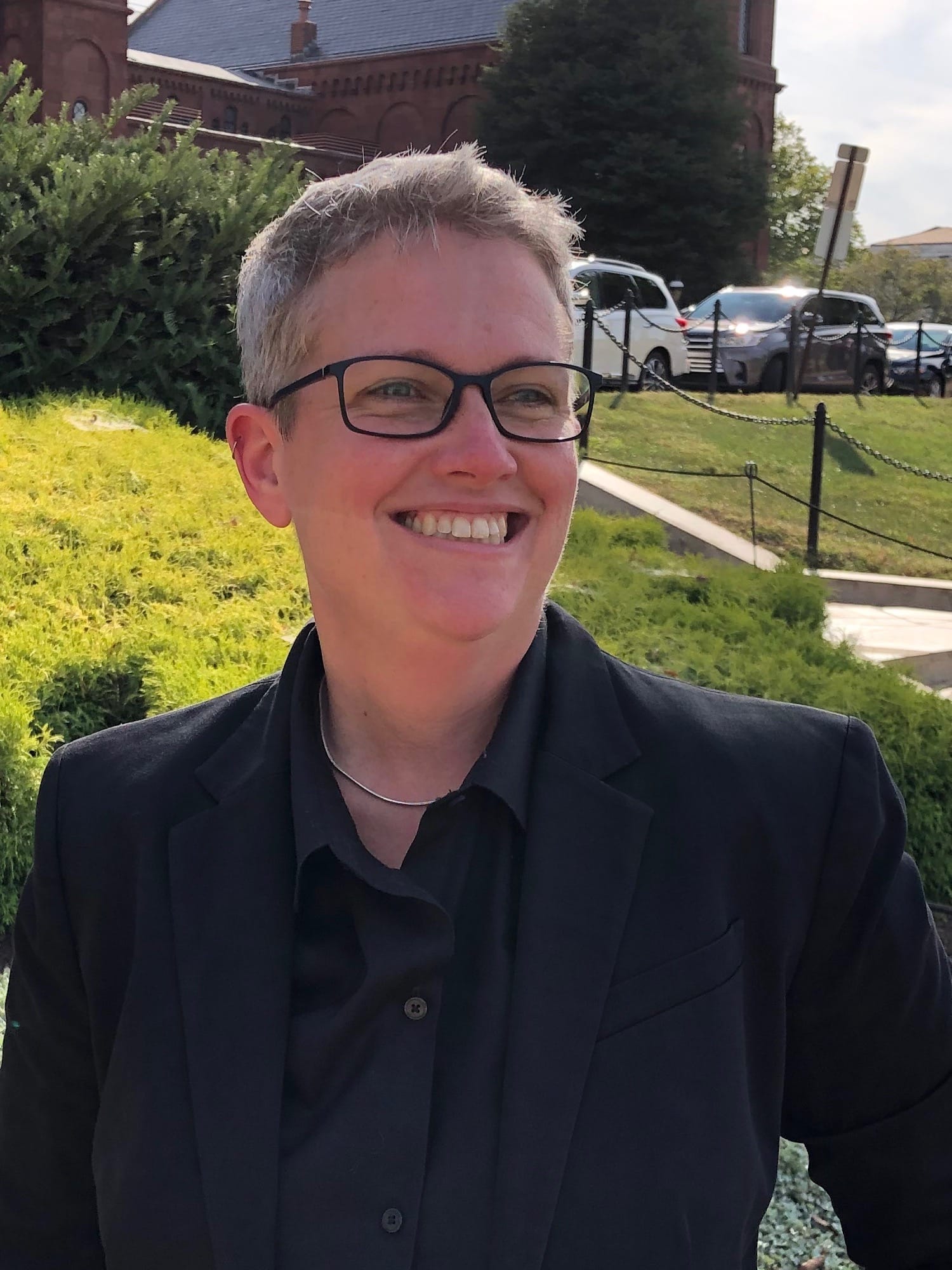
Sharon Leon is Co-CEO of the Corporation for Digital Scholarship. She has worked across Digital Scholar's software projects since their inception, originally as faculty at the Roy Rosenzweig Center for History and New Media at George Mason University and then at Michigan State University.
A humanistic approach to open infrastructure sustainability beyond grant-funded beginnings
Digital Scholar was founded in 2009, which surprises people when Leon mentions it. The original purpose was straightforward: find a way to sustain core open source software, specifically Omeka and Zotero, so that they could continue to exist without depending indefinitely on grants. The founders' approach was shaped by who they were. Leon and her colleagues were trained as historians, and that perspective shaped how they thought about the people who would use their tools, even as that user base eventually extended far beyond digital humanities or the academy.
"Zotero has 17 million users around the world," Leon notes. "They're certainly not all humanities scholars. They're in the legal field, the sciences, the corporate world, all over. Our perspective shows us that the users of our software are not necessarily folks who can build their own tools. They're not necessarily super technically adept, though many are." Digital Scholar's insistence on interfaces and documentation that make research tools genuinely accessible — resisting the temptation to assume users can just write a script when they encounter a problem — flows directly from that founding orientation. "What we are keeping in mind are the humans doing the digital work, in addition to the humanistic subject matter," Leon says.
Their work has expanded beyond those two initial projects. Digital Scholar now stewards five core projects: the original two (Omeka and Zotero), with PressForward, Tropy, and Sourcery joining through the years. The staff has grown as well, expanding from a very lean operation to a team of roughly 35 people.

Building sustainability through services
The sustainability solution the founders landed on was to offer services alongside the software in response to user needs. "People are willing to pay a little bit for storage, or for hosting, or some other helpful service," Leon explains. "And that, in turn, allows us to pay the project teams to keep the software going."
Central to this approach is a core question: what do people find valuable enough that they're willing to pay for it? The signals come from users themselves, sourced from the Digital Scholar team monitoring closely requests that surface in forums, discussion posts, and GitHub issues; these requests reveal where genuine needs aren't yet being met. "In the case of Omeka, it was a clear sense that not all of our users had the time or interest in setting up a server themselves. We thought, wouldn't it be easier if they could just press a button and start?" That signal led to a popular hosted Omeka service. Similarly, Digital Scholar offers paid storage upgrades for Zotero, making it possible for individuals and groups to sync and share materials.
The organization's origin story includes an unusual institutional detail that is fundamental to how it operates in order to sell these services. Digital Scholar is not a 501(c)(3) like many nonprofit organizations in the open infrastructure space in the United States. Rather, it is a nonprofit, nonstock corporation in the Commonwealth of Virginia, meaning the state confers nonprofit status, but the organization carries no IRS tax-exempt designation. "We don't have a membership model," Leon says. "We actually sell services. And selling services is a different kind of model; we pay income tax, we collect sales and remit tax, we do all of those things that a regular business would. But we have no owners, no shareholders, and no way to do anything with the income except support our core software projects and support the field."
This structure also lets Digital Scholar play a direct role in strengthening the broader research ecosystem. Because its business purpose includes support for open source software and open access work in digital scholarship and cultural heritage, Digital Scholar can make direct charitable donations to other nonprofits or it can directly underwrite projects at other institutions (such as its support of the Digital Humanities Now news outlet at Centers for Digital Scholarship at the Northeastern University Library). This model also lets Digital Scholar explore ways to contribute in-kind resources and staff time, or offer access to its business systems and financial infrastructure. This flexibility has opened the door to a new kind of work.
Extending the model: fiscal support and organizational mentorship
In recent years, Digital Scholar has begun offering a different kind of support to other projects in the open infrastructure ecosystem. Known within the organization as Slipstream, it is not yet a formal, open program, but two current relationships illustrate the shape of what Digital Scholar is developing.
The first is with Mukurtu CMS, a cultural heritage platform that has been around nearly as long as Omeka. Mukurtu began offering managed hosting to generate revenue outside of grant funding, and turned to Digital Scholar to handle the operational side: purchasing, server procurement, invoicing, and contracting. "We have that business infrastructure that we can share with them," Leon says. "Net income from running all of those systems get transmitted back to the project to support it." For a mature project like Mukurtu that doesn't need intensive guidance, the relationship is largely practical; Leon describes it as a shared business layer that eliminates duplication of administrative effort.
The relationship with RightsStatements.org is more intensive. RightsStatements.org is a critical piece of rights infrastructure for open access to digital cultural heritage, originally born from collaboration among major aggregators including DPLA and Europeana. But over time, through COVID and shifting institutional priorities, its governance structures had become fragile. The project's Interim Steering Committee was dedicated but lacked an independent legal entity and the organizational capacity to sustain the work.
When RightsStatements.org put out a call for potential new institutional homes, Digital Scholar responded. "We realized how important they are to the global working of understanding access to digital cultural heritage materials," Leon says. The result is an initial three-year relationship in which Digital Scholar is working with the Interim Steering Committee to rebuild governance, creating structures that allow the community to participate in decisions about the statements, their updates, and their translations. The goal is, ultimately, to set the project up for success as its own independent organization.
The two relationships represent distinct points on a spectrum: with Mukurtu, they are offering shared services building on existing expertise, while with RightsStatements.org, they are participating in an intense hands-on project of building a governance framework from the ground up. Through these two projects, Digital Scholar is discovering how much capacity it actually has for this kind of support; that knowledge will shape its offerings going forward.
Planning infrastructure for the future
Open source infrastructure, Leon observes, faces a particular challenge: the software can persist indefinitely, but to do so, the sustainability of the people who work on it must be considered. "Infrastructure may not be coming to the end of its life," she says. "But the humans whose careers have been centered around supporting it — at some point, those people have to be allowed to move on, whether to retirement or to something else. But infrastructure is infrastructure, and people rely on it."
Her advice: think about sustainability from the beginning. Not as an afterthought, not as a future grant application, but as a foundational design question. There are still too many pieces of the infrastructure the research community relies on that haven't accounted for the long-term.
For their part, Digital Scholar is entering a new strategic planning cycle, and the agenda ahead reflects the same user-driven logic that has guided the organization since its founding. Leon shared a few developments on the horizon that users can look forward to.
PressForward, a WordPress plugin for aggregating and curating scholarly gray literature, is in the early stages of being extended into a standalone web service; fewer people run WordPress blogs, and content now moves through Substacks, newsletters, and static site generators. "The world of scholarly communications has changed, and the tool needs to meet users where they are," she says. The team is also thinking carefully about preservation and portability: connectors for ArchivesSpace and Archivematica extend Omeka’s reach into the archival ecosystem, and static site exporters now allow Omeka sites to migrate to Hugo for retirement and/or preservation. On artificial intelligence, Digital Scholar is watching carefully and beginning to support some applications through opt-in plugins — but nothing by default. For instance, Tropy is developing a computer-generated transcription service for research materials. "The users will guide us on the uses they feel comfortable with," Leon says.
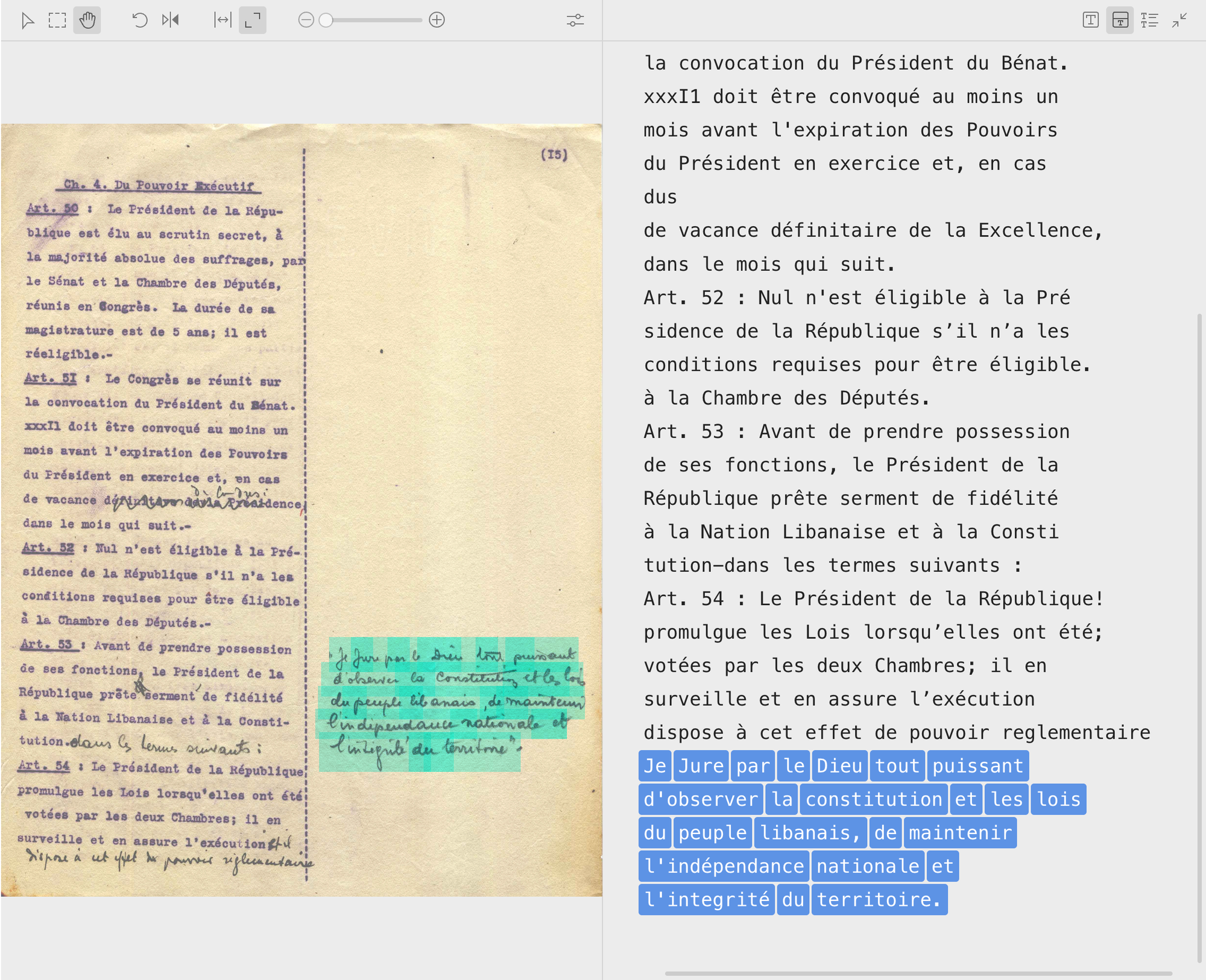
An example of the new handwriting transcription feature in Tropy.
At the same time that they are cultivating their own tools and communities, Digital Scholar is also actively growing its role as a support and mentorship organization for the broader open infrastructure ecosystem. What Digital Scholar offers (business infrastructure, governance support, hard-won institutional knowledge) exists in service of a field that still has too many projects struggling to survive the gap between initial grant funding and genuine sustainability.
Building on 15 years of foundational support for critical open infrastructure tools, Digital Scholar is responding to the needs of researchers, creators, and stewards to strengthen the research ecosystem from the ground up.
The Corporation for Digital Scholarship (Digital Scholar) stewards Omeka, Zotero, PressForward, Tropy, and Sourcery, and provides organizational support to RightsStatements.org and Mukurtu. Learn more at digitalscholar.org and visit their entries in Infra Finder.